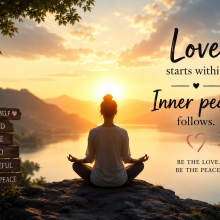
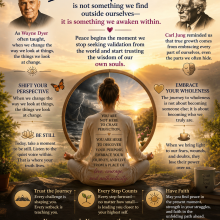
Returning to Yourself: The Gentle Art of Inner Peace’s.

The Journey Toward Inner Peace doesn’t arrive all at once. It begins quietly — often in the middle of chaos, heartbreak, or a moment when life forces someone to pause and look inward. The journey is not about escaping the world but learning how to move through it with a steadier heart, a clearer mind, and a deeper sense of self.
1. Awakening: The Moment Someone Realizes They Need Peace Every journey starts with awareness.
For many people, inner peace begins when they finally admit that the way they’ve been living is no longer sustainable. Maybe they’ve been carrying too much, pleasing too many, or fighting battles that drain their spirit. This awakening is not weakness — it’s the first act of courage. It’s the moment someone says:
“I deserve to feel whole again.” This is where the path opens.
2. Releasing What No Longer Serves Inner peace requires space.
And space comes from letting go — of old stories, old wounds, old expectations, and the pressure to be everything for everyone. Letting go doesn’t mean forgetting.
It means choosing not to let the past control the present. This stage often involves: Forgiving self for mistakes made in survival mode Setting boundaries without guilt Walking away from environments that disturb the soul Releasing is not a single moment. It’s a practice.
3. Returning to the Self Once the noise begins to fade, a person can finally hear themselves again. This is where they rediscover: Their values Their voice Their needs Their truth Inner peace grows when someone stops living for approval and starts living in alignment.
They learn to trust their intuition, honor their emotions, and speak their truth without shrinking. This is the stage where confidence quietly rebuilds itself.
4. Choosing Stillness in a Loud World Peace is not found in perfect conditions — it’s created through daily choices. Someone on this journey learns to: Sit with their emotions instead of running from them Breathe before reacting Respond instead of exploding Rest without feeling guilty Protect their energy Stillness becomes a form of strength.
5. Healing the Inner Landscape, True peace requires healing — not pretending. This part of the journey is tender.
It involves: Confronting old pain Understanding emotional triggers Rewriting limiting beliefs Learning healthier patterns. Healing is not linear. Some days feel like progress; others feel like starting over.
But every step — even the painful ones — moves someone closer to wholeness.
6. Living Peacefully, Not Perfectly, Inner peace is not a destination. It’s a lifestyle, a mindset, a daily commitment. A person who has grown into peace: Protects their boundaries. Speaks with intention. Chooses relationships that nourish them, Practices gratitude. Moves with purpose. Refuses to abandon themselves They understand that life will still bring storms — but they no longer collapse under the rain.
They’ve built shelter within themselves.
7. The Transformation The journey toward inner peace changes a person from the inside out. They become: Softer, but stronger Quieter, but more powerful. Kinder, but less tolerant of disrespect. More grounded, more aware, more present They stop chasing validation.
They stop fighting unnecessary battles.
They stop apologizing for being who they are. They finally feel at home within themselves.
Closing Reflection Inner peace is not about escaping life — it’s about meeting life with a steady heart.
It’s about choosing yourself, honoring your truth, and walking forward with clarity and courage.
Anyone who begins this journey is already transforming.
Because the moment they choose peace, they choose freedom.
Silence becomes a teacher.
Solitude becomes a sanctuary.